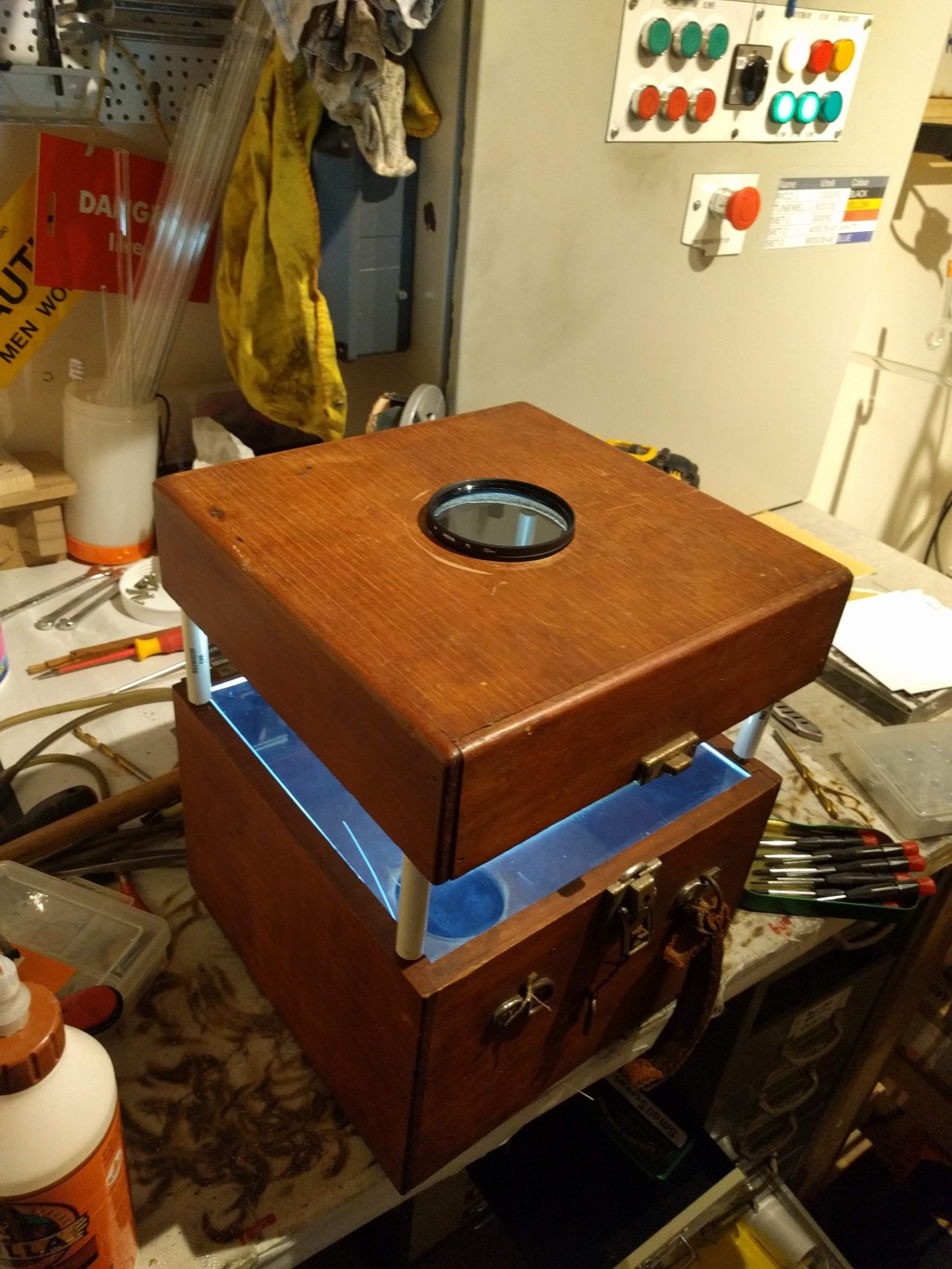
Taking the strain

After looking at the steps to build a simple polariscope in Straining the point and Strain in the neck, this time we’ll run through the use of the device to visualise and recognise strain in typical neon bends, as well as some basic annealing techniques that can help to reduce strain and lessen the chances of breakage.

Scientific and industrial polariscopes can be used to make numerous accurate measurements of strain and its properties in a wide range of transparent materials. In this post we will concentrate on using the kind of simple polariscope shown in the last two posts to make fairly simple determinations of the level of strain in glass. For typical neon work this is more than adequate (although scientific and industrial glassworkers may want something more refined).

img_20180509_175719.jpg
Strain in a typical neon bend

Continue reading “Taking the strain”

Strain in the neck

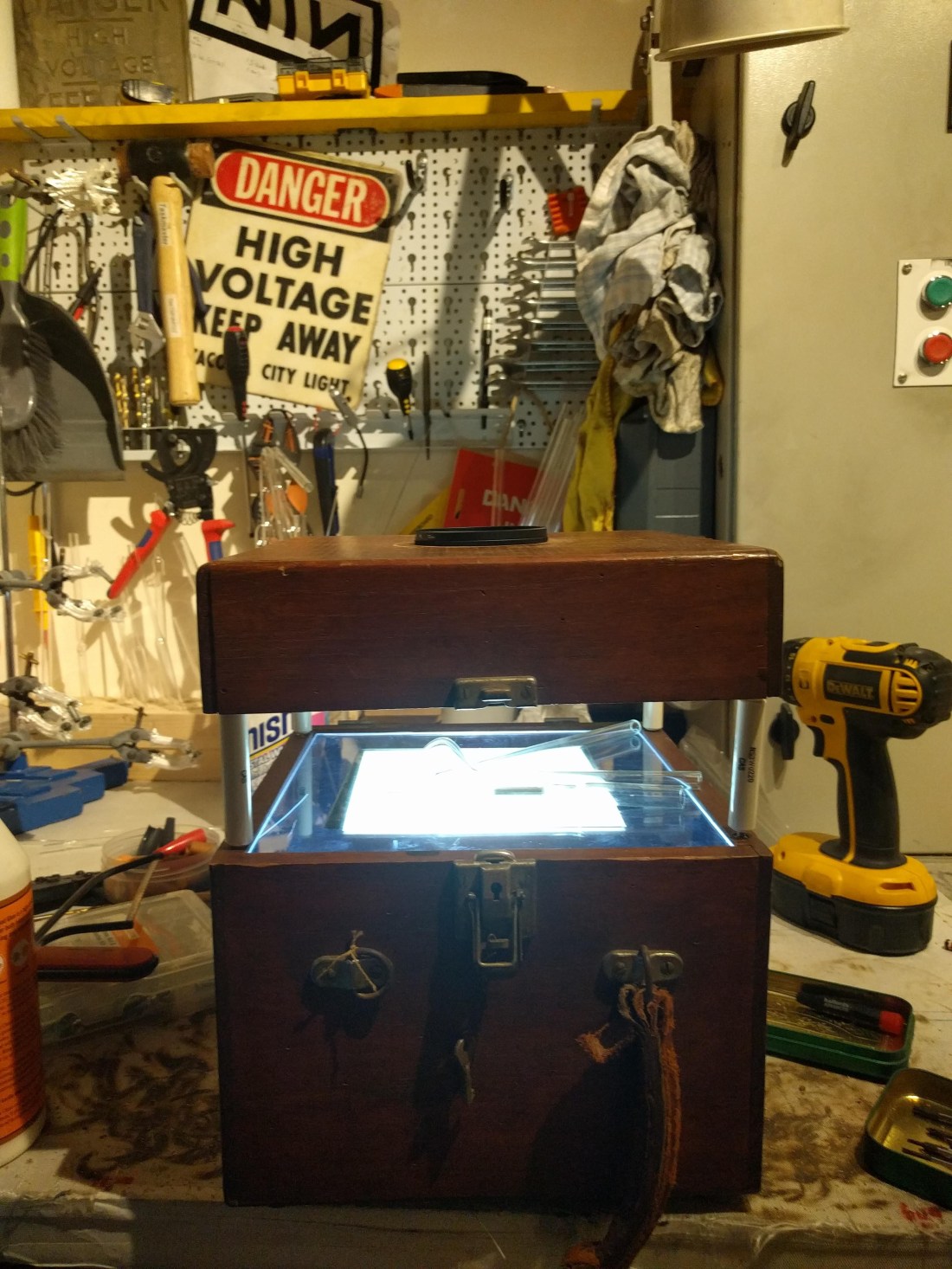
In the last post we looked at the steps to build a simple strain viewer, or polariscope. In this article we’ll try to improve on that design to produce a more robust, smaller, and more usable device.

The principals are exactly the same – the light source and two polarising filters to produce plane polarised light, and to filter out the light that passes directly through the sample. The only difference is that this time we’ll use a larger stage area, and a more sturdy case to house the unit.

img_20181014_1517411
Finished 150mm² polariscope

Continue reading “Strain in the neck”

Straining the point

Welcome back to another home-brew neon equipment post. This time we’ll take a look at techniques for visualising strain (or stress) in glass.

Stress develops in glass when it cools unevenly from a softened or molten state. This often happens when the glass is cooled or heated rapidly or when the glass itself is uneven (perhaps because the thickness of the heated glass is not uniform). Mechanical forces that exist between the different parts of the glass cannot be resolved since part of the glass has already cooled back to the solid state. These forces remain trapped in the fabric of the material and may cause unpredictable breakage at some future time.

Very rapid heating or cooling may cause glass to immediately shatter from the stress – especially if some pre-existing strain is present.

IMG_20180420_190909.jpg
Viewing strain fringes in transparent polycarbonate with the polariscope

In this post we will look at the construction of a very simple optical tool for examining stress in glass that can be built cheaply and with simple parts and materials. The total cost is under £20, and a simple device can be built in just a few minutes.

Continue reading “Straining the point”